


Similar products
Similar products



Shipping & policies
- Estimated delivery on Jan 19–28
Free and easy returns. Learn more
With Faire, shop unique wholesale products for your shop from brands like La Boîte à Cailloux and more.
Description
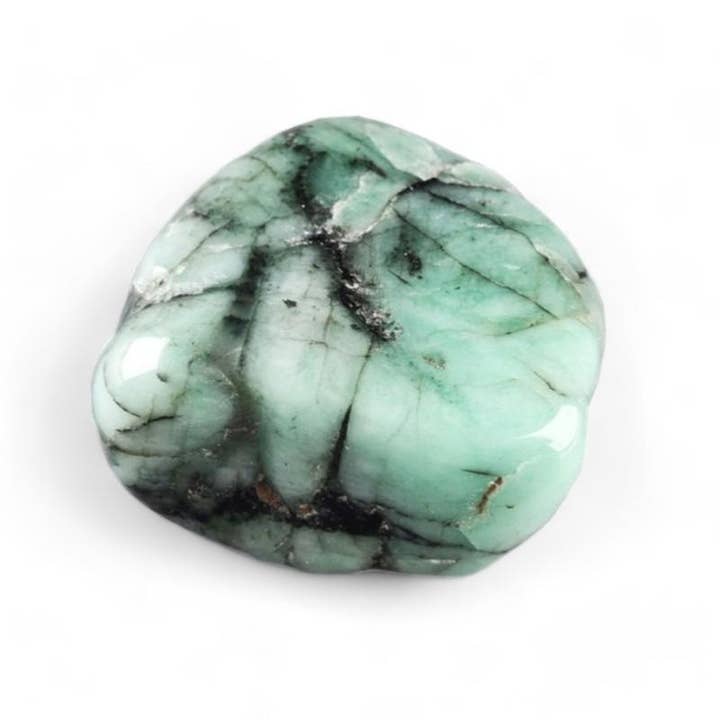
EMER-02 Origin: Brazil Grade: AB Dimensions: 05-10g - Approximately 15-25mm 10-20g - Approximately 25-35mm Origin: Brazil Grade: AB = standard Tumbled emerald stone from Brazil Sold individually. Weight options 05-10g and 10-20g Colors and patterns vary from one stone to another. The four precious stones, diamond, ruby, sapphire, and emerald, are stones of exceptional beauty. The origin of the name emerald comes from the Persian "zamarat," then from the Latin "smaragdus," translating to "green precious stone." This magnificent stone belongs to the beryl family (from the ancient Greek "beryllos" meaning "crystal of the color of seawater"). Its wonderful green color makes it a highly sought-after and coveted stone for millennia. Extremely particular conditions were required for the formation of emerald, which explains its rarity. Emerald is part of the silicate mineral group. It is mainly composed of beryllium, chromium, iron, and vanadium. However, these components are not located in the same layers of the earth. Beryllium comes from the earth's magma, and the other components come from the earth's mantle. The meeting occurs through magma bubbles that rise to the mantle. The content of these components is the source of the multiple shades of green. The most beautiful emeralds are those with total transparency, with a dark and intense green. Emerald remains sensitive to shocks, so a way of cutting it called "emerald cut" has been attributed to it. This allows limiting accidents during setting. Emeralds have inclusions called: gaps, frosts, or crystals, allowing their authenticity to be certified. They have a hardness of 7.5 to 8 on the Mohs scale. In conclusion, the beauty and rarity of an emerald depend above all on its color and transparency. The incredible green of the emerald symbolizes the renewal of the seasons, fertility, and life. In ancient Egypt, around 5,000 years BC, the Egyptians were already extracting emeralds from mines not far from the Red Sea. In 2,000 BC, the Babylonians supposedly used emeralds as a currency of exchange. Subsequently, these mines were again exploited by Greek miners during the time of Alexander the Great (356 to 323 BC). They were discovered in 1816 by Frédéric Cailliaud, an explorer (1787 - 1869). Cleopatra, queen of ancient Egypt (69 - 30 BC), particularly loved emeralds. They were the embodiment of national pride. Cleopatra owned sumptuous jewelry with emeralds and used to offer them with her portrait engraved on them.
This info has been automatically translated.
Details
SKU: EMER-0205-10 Made in France Weight: 10 g (0.35 oz)


